
Mowing steep or uneven terrain can be one of the toughest challenges in professional landscaping. That’s where slope mowing comes in, the specialized process of maintaining grass and vegetation on inclines safely and efficiently. At Steelfort, we’ve seen firsthand how wheeled slope mowers consistently outperform track-driven models in both performance and precision. Whether you’re managing parklands, embankments, or rugged farmland, understanding the difference between wheel and track systems is essential to achieving reliable results in slope mowing.
The Challenges of Slope Mowing
Briefly define what slope mowing is and why it’s demanding for operators.
Why Wheeled Mowers Perform Better on Steep Terrain
Talk about traction, maneuverability, and stability.
Cut Quality and Efficiency in Slope Mowing
Highlight even cutting, speed, and terrain adaptability.
When to Choose Track Models for Slope Work
Add balance — Google rewards content that shows both sides.
Steelfort’s Expertise in Slope Mowing Solutions
End with brand authority and link to dealer or product pages.
For landscapers worldwide, managing steep slopes and challenging terrains has long been a formidable task. The conventional belief has been that track mowers were the ultimate solution for conquering these demanding conditions. However, we are here to challenge that notion with an innovative slope mower that offers superior performance, operational efficiency, and an all-in-one solution that simplifies landscapers’ lives. Our remote-controlled slope mower, equipped with wheels instead of tracks, is the game-changer we are discussing today.
Let us debunk the common misconception that track-driven mowers “outperform” their wheeled counterparts in terms of quality, traction, and versatility. In reality it’s the wheeled slope mower that truly excels in challenging terrain, and here’s why.
Wheeled Slope Mowers Deliver Higher-Quality Cuts Compared to Track-Driven Mowers
Did you know that many track-driven machines were originally designed for forestry applications? Their primary purpose was to clear land by cutting, grinding, and clearing vegetation. When it comes to achieving precise and high-quality mowing results on your terrain, your choice of equipment plays a critical role. Tracks were not originally designed for precision mowing, which can affect the quality of the cut on steep slopes.
Wheeled slope mowers outshine their track-equipped counterparts in delivering superior-quality cuts every time. Here is why:
- Enhanced Maneuverability: Wheels enable the mower to access tight spaces and intricate contours that track mowers cannot reach, resulting in a more even and professional-looking cut, even in challenging and hard-to-reach areas.
- Reduced Terrain Damage: Tracks cannot exert concentrated pressure on the ground and often leave significant terrain damage. Wheels evenly distribute the machine’s weight, resulting in minimal to no terrain damage.
- Stable Performance: Wheels provide stability, allowing the mower to maintain a consistent cutting pattern without interruptions or performance fluctuations common in track-driven mowers.
- Precise Trimming: Wheels offer greater agility and maneuverability, allowing for precise and clean trimming around obstacles and edges.
- Versatile Cutting Angles: Adjusting cutting height is crucial for consistent and uniform results, a capability not often found in track-driven mowers.
Wheeled Slope Mowers Offer Superior Traction Over Tracks
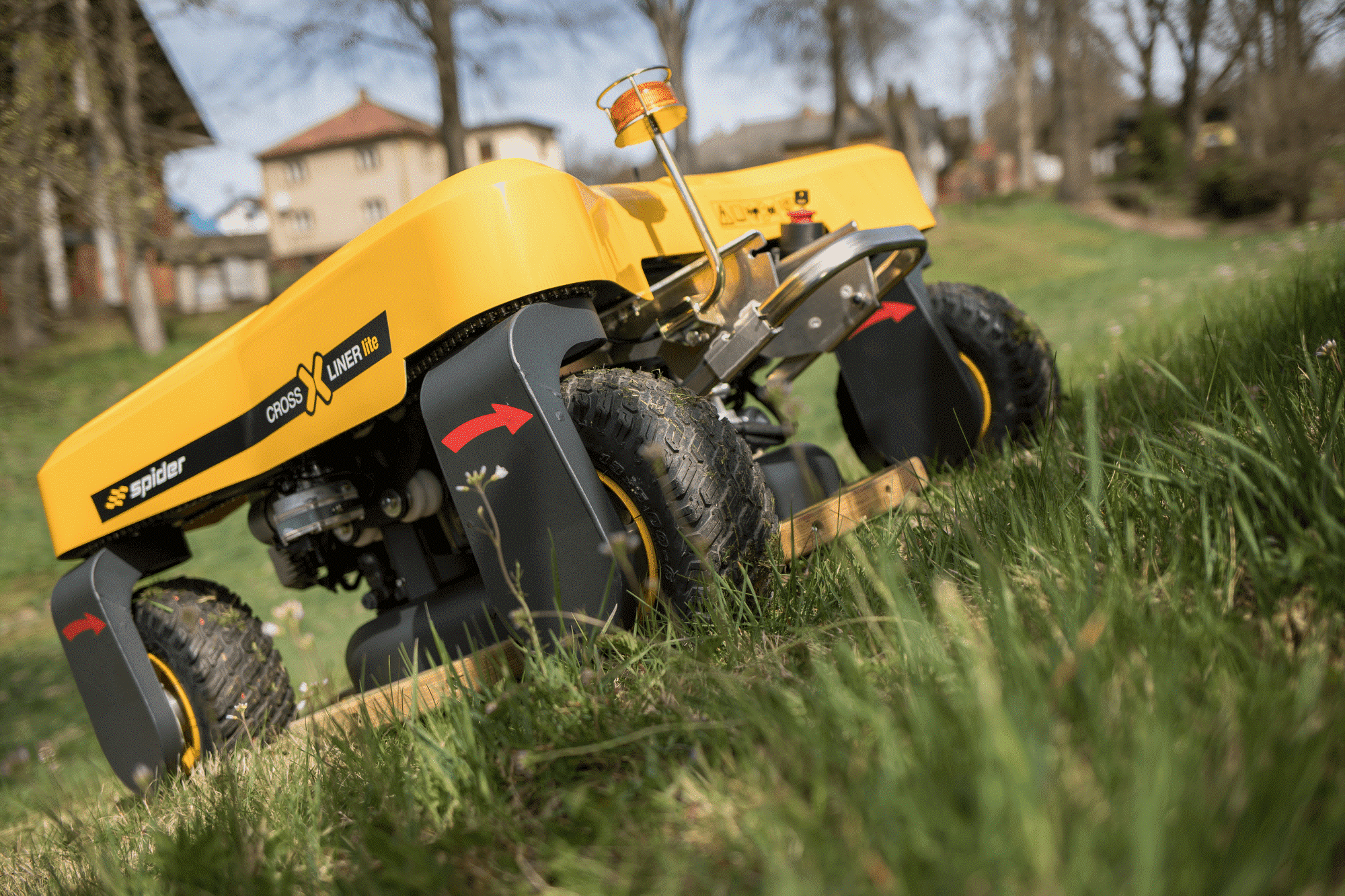
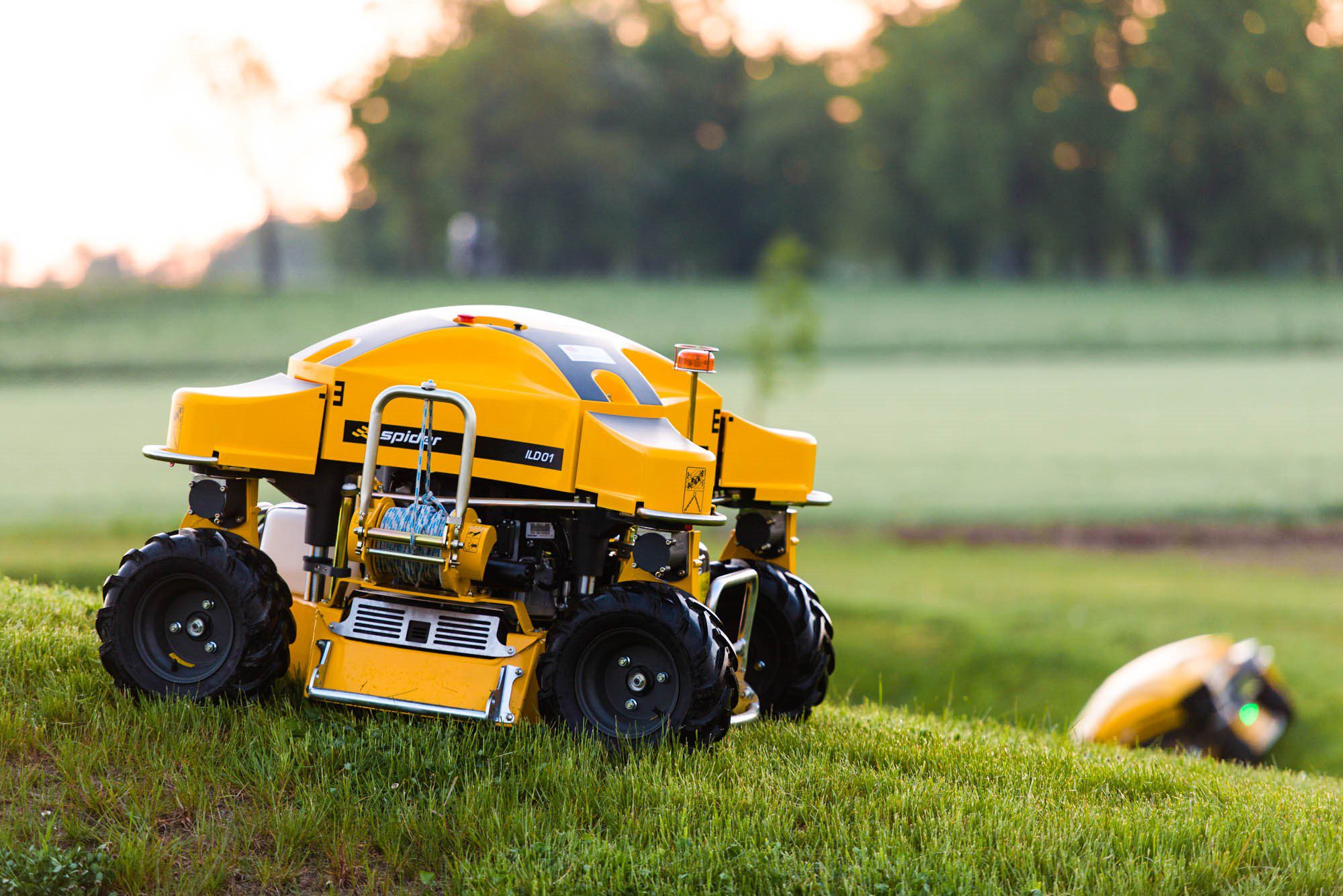
While many assume that track-driven mowers provide better grip due to their larger surface area, the reality is quite different. Wheeled slope mowers offer superior traction because their wheels are purpose-designed for slope mowing, featuring innovative features that optimize traction on various terrains.
Consider the mower’s ability to evenly distribute its weight as it inclines, in addition to specialized tread patterns and ultra-durable materials that provide a better grip on challenging slopes. The combination of these features ensures you can navigate steep slopes and uneven terrain with ease compared to track-driven mowers.
Additional benefits of wheeled slope mowers include:
- Terrain Adaptability: Wheels excel in adapting to different terrain types, from muddy or loose soil to heavy brush and park grass. They adjust to changing ground conditions, maintaining uninterrupted traction.
- Reduced Ground Disturbance: Because wheels distribute the mower’s weight over a larger surface area, ground disturbance and terrain damage are minimized. This results in better traction, as wheels maintain consistent ground contact more effectively than tracks.
- Improved Steering Control: Wheels provide precise steering control, enabling operators to make quick adjustments when needed. This makes it easier to navigate tight turns and other challenges compared to track-driven mowers.
Wheeled Slope Mowers Offer Unmatched Versatility and Capability Over Tracks
Wheeled slope mowers provide landscapers with numerous advantages that surpass those of track-driven models. Whether dealing with ultra-steep slopes or more straightforward terrain, such as park grass, wheeled mowers offer greater versatility and capabilities without compromising on cut quality. The flexibility and adaptability of wheels empower operators to tackle a wide range of terrains and landscapes effortlessly.
Consider these convenient advantages as you compare track-driven mowers to wheeled slope mowers:
- Greater Accessibility: Wheeled slope mowers easily access narrow pathways, uneven terrain, restricted spaces, and more. Track-driven mowers may leave unmowed patches and crevices due to their limited access.
- Easy Transitions: Wheels adapt seamlessly to various ground conditions, enabling quick transitions from mowing flat terrain to ultra-steep slopes within the same session.
- All-In-One Solution: Wheeled slope mowers eliminate the need to purchase, use, and transport multiple pieces of equipment. Customize your mowing setup based on the terrain type you encounter.
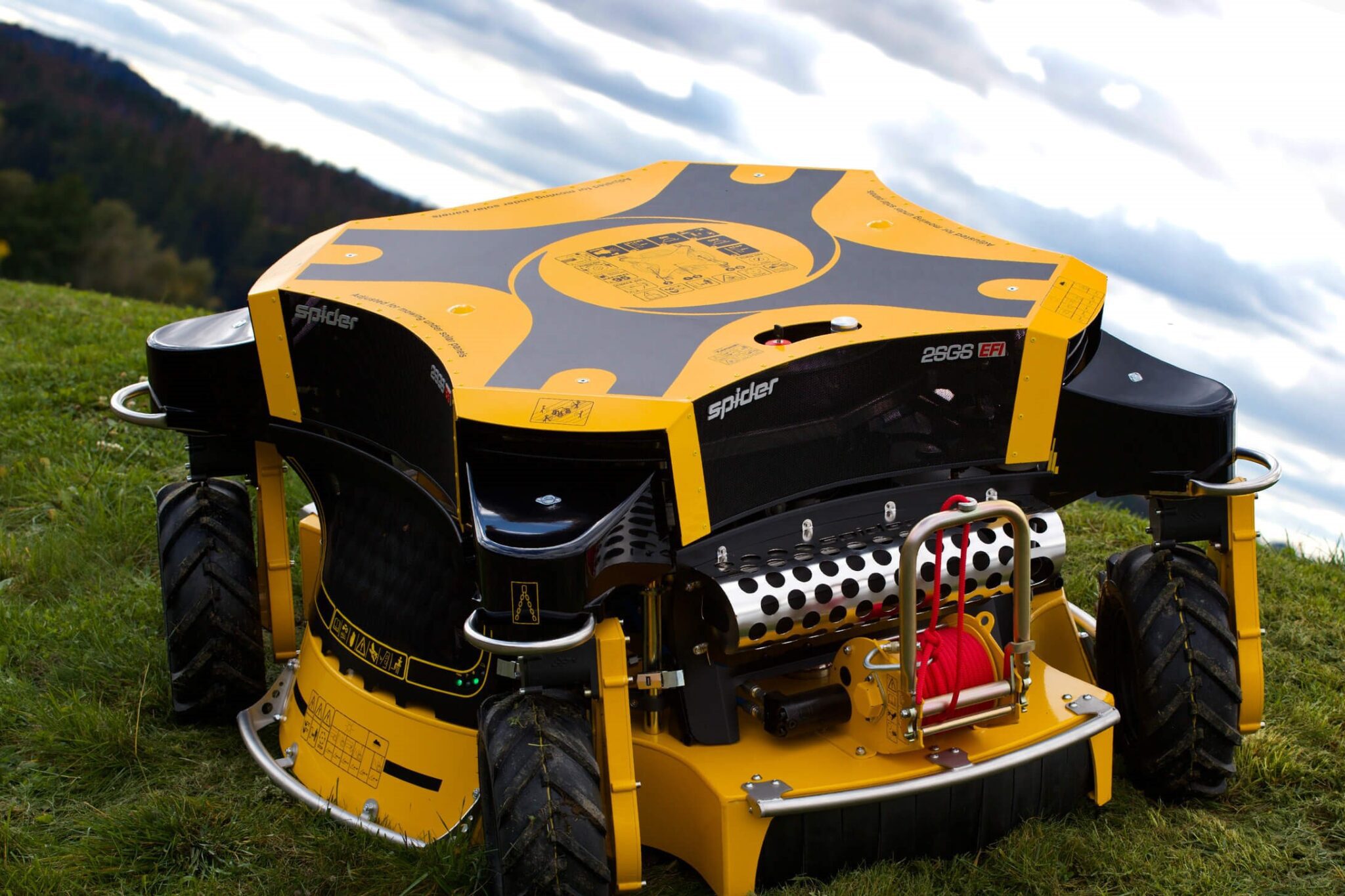
In summary, wheeled slope mowers outperform track-driven counterparts in terms of cut quality, traction, and versatility. They provide a comprehensive solution for tackling challenging terrains, making them the preferred choice for modern landscapers.
Frequently Asked Questions
What is slope mowing and why is it important?
Slope mowing is the process of cutting grass safely and efficiently on uneven ground, hills, and steep terrain. Using specialised steep slope mowers helps improve safety, maintain property appearance, and reduce the risk of mower rollovers on difficult landscapes.
How does slope mowing differ from regular lawn mowing?
Slope mowing requires equipment designed for traction, stability, and control on hillsides. Unlike standard lawn mowing, steep incline mowers are built to handle challenging angles and uneven surfaces while delivering a clean, even cut.
Are wheeled mowers better for slope mowing than track-driven models?
Both options can work well depending on the terrain. Wheeled steep slope mowers are ideal for moderate hills and faster mowing, while track-driven models provide extra grip and stability for extreme conditions and no limits slope mowing applications.
What safety features should I look for in a slope mower?
The best lawn mower for hills and slopes should include features like low centre of gravity, rollover protection, strong traction control, remote operation, emergency stop systems, and reliable braking for safer slope mowing.
What is the maximum slope angle suitable for slope mowing?
The maximum slope angle depends on the mower model and terrain conditions. Some steep incline mowers can safely mow slopes up to 50 degrees or more, especially remote-controlled models designed for no limits slope mowing. Always follow the manufacturer’s safety guidelines.